
Buying a Fixer-Upper Near Charleston? The FHA 203(k) Loan Lets You Finance the Home AND the Repairs (2026)
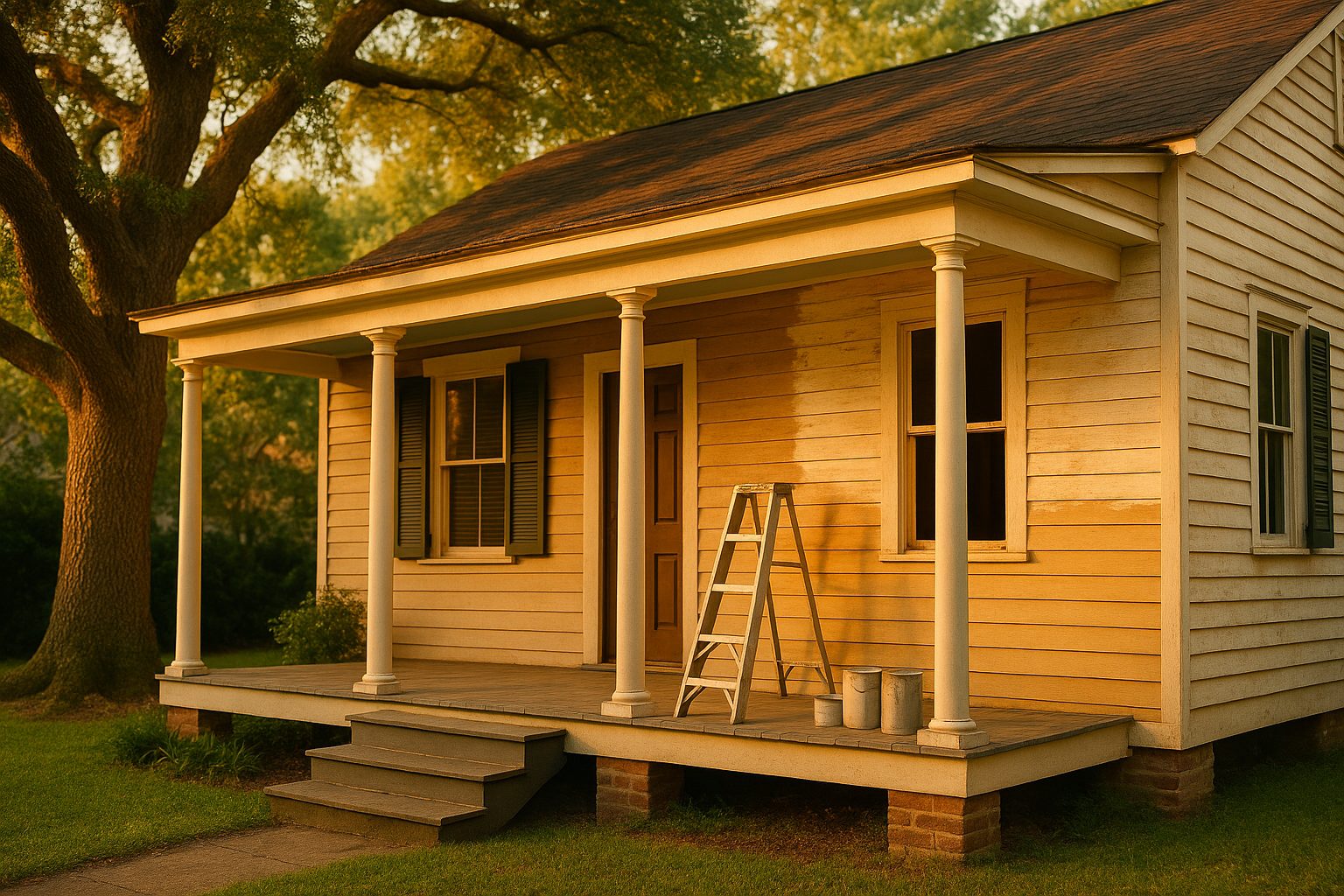
If you keep losing out on move-in-ready homes, or you've walked away from a place you loved because it "needed too much work," there's a loan built for exactly that moment. An FHA 203(k) renovation loan lets you borrow the purchase price of a home and the cost of fixing it up in one mortgage — one closing, one monthly payment.
Here's why that matters: instead of needing cash for the house and more cash for the renovation, the loan is based on what the home will be worth after the work is done, and it comes with the low FHA down payment of as little as 3.5% down with qualifying credit. It's how a regular buyer competes for a house that just needs some love.
It's not effortless, and I won't pretend it is. A 203(k) takes more paperwork, a licensed contractor, and more patience than a plain purchase. But for the right home, it turns "I can't afford to fix that" into a house you can actually buy. Tell me about the place you're looking at and I'll tell you honestly whether it fits.
So many of the homes I love around the Lowcountry are the older ones — the cottages with great bones, the places with a porch that's seen a hundred summers and a kitchen that hasn't been touched since the '80s. And I watch buyers fall for them and then walk away, because they can't pay for the house and the renovation both, and they keep getting outbid on the shiny move-in-ready listings by cash offers. If that's been you, I want you to know about the program almost nobody talks about — because it was built for exactly this.
What an FHA 203(k) loan actually is
An FHA 203(k) is a government-insured mortgage with one job: let you buy a home that needs work and finance the repairs in the same loan. Rather than a purchase loan plus a separate renovation loan plus a pile of cash, it's a single mortgage covering both the price of the home and the cost of the planned work.
The piece that makes it click is this: the loan amount is based on the home's after-renovation value — what it will be worth once the work is finished — not just what the run-down version appraises for today. So the improvements you're paying for also help support the loan. One closing, one monthly payment, and the same low FHA down payment of as little as 3.5% (with qualifying credit) applied to the combined total.
One important guardrail up front: like FHA loans generally, a 203(k) is for a home you'll live in — your primary residence. It's not for a flip or a rental.
The two kinds: Limited vs. Standard 203(k)
There are two flavors, and knowing which one fits your project saves a lot of confusion. The difference is basically how big and how structural the work is.
- For cosmetic and non-structural work: paint, flooring, a kitchen or bath update, a new roof, HVAC, appliances, that kind of thing.
- Total renovation costs are capped at $75,000 (this ceiling was raised from the old $35,000 limit).
- No HUD consultant required, so it's faster and lighter on paperwork.
- Great for a solid house that just needs freshening and updating.
- For major or structural work: moving walls, additions, foundation or major-systems repair, a gut renovation.
- Requires a HUD consultant to write up the scope and oversee the project.
- Has a minimum of $5,000 in eligible repairs, and no fixed dollar cap of its own — it's limited instead by the FHA loan limit for your county.
- More involved, but it's what makes a true fixer-upper possible.
If you're not sure which bucket your project lands in, that's genuinely one of the first things I'll help you sort out — because it changes the timeline, the paperwork, and sometimes which house makes sense.
How much house can that reach in the Charleston area?
Because a Standard 203(k) is capped by the county FHA loan limit rather than a flat renovation number, the local limit matters. For 2026, the FHA loan limit for a single-family home in Charleston County is $690,000 — one of the highest in South Carolina, which reflects our higher-cost Lowcountry market. That's the ceiling on the total loan (purchase plus eligible renovation, based on after-renovation value), not a promise of what you'll qualify for; your own income, credit, and the property still drive the real number.
The practical takeaway: in a market where move-in-ready homes are pricey and competitive, the older house that "needs work" is often the more attainable path — and a 203(k) is how you finance the fixing without a second loan.
How the money actually gets to the work
This is the part that's different from a regular mortgage, so it's worth understanding before you fall in love with a project. You don't get a check for the renovation at closing. Instead:
- You line up a licensed, approved contractor and a defined scope of work before closing — the lender needs to see the plan and the bids.
- The renovation money is held in escrow and released to the contractor in scheduled draws as the work is completed and inspected — not paid up front.
- A 2026 update to the program modernized the Limited 203(k) draw schedule, giving contractors room for more scheduled payments across a project (up from the old two) so the cash flow of the work runs more smoothly.
- There's a set timeline for finishing the work after closing, with inspections along the way.
None of that is a catch — it's the structure that protects you, the lender, and the contractor, and keeps the project from stalling halfway. It does mean a 203(k) is built around hiring the work out, not doing it yourself on weekends.
What you can't do with it
A 203(k) is for making a home livable, safe, and solid — not for luxury extras. The classic example: a Limited 203(k) won't finance a swimming pool or other luxury add-ons. The work has to be eligible renovation, and anything that reads as a luxury upgrade generally doesn't qualify. If you've got a wish list, I'll help you separate the parts a 203(k) will cover from the parts it won't before you count on it.
The honest trade-offs
I'd always rather you hear the downsides from me now than feel blindsided later, so here's the straight version:
- It's more work and more paperwork. Contractor bids, a scope of work, a possible HUD consultant, inspections, draws — a 203(k) has more moving parts than a vanilla FHA loan.
- It's slower. Both to close and to finish, because the renovation runs on its own timeline after closing.
- You need a real contractor lined up. The whole thing hinges on a licensed pro and a clear plan, so the sooner you start, the better.
And the honest counterweight: for a lot of buyers, the real choice isn't "203(k) versus an easier loan." It's "the home that needs work versus no home at all," or "wait years to save for renovations versus do it now and live in the finished house." A little more patience on the front end can be the difference between competing for a house and getting priced out of every move-in-ready one.
Is this the right door — or is another one better?
A 203(k) is a wonderful fit for the right home and the right buyer, but it isn't the only path, and part of my job is telling you when something else fits better. If the house is actually in good shape and you're just updating finishes over time, you may be better off with a plain FHA or conventional loan and tackling projects as you go. If you're early in the journey or short on down-payment cash, it's worth knowing about South Carolina down payment assistance and the first-time homebuyer programs here too.
And if the theme that keeps coming up for you is "I didn't know that was an option," you're in good company — most of my favorite write-ups are about exactly that: using boarder income to qualify, USDA loans in the Lowcountry, and bank-statement loans for the self-employed. You can also see all my loan options in one place. The right answer always comes from your real numbers and the real house — not a rule of thumb.
- An FHA 203(k) rolls the purchase price and the renovation into one mortgage — one closing, one payment, based on the home's after-renovation value.
- Same low FHA down payment of as little as 3.5% (with qualifying credit) on the combined total.
- Limited 203(k) = smaller, cosmetic work up to $75,000, no HUD consultant. Standard 203(k) = bigger/structural work, needs a HUD consultant, $5,000 minimum, capped by the county limit.
- In Charleston County the 2026 FHA limit is $690,000 for a single-family home — one of SC's highest.
- Honest trade-off: more paperwork, a licensed contractor, and a slower timeline — in exchange for financing the home and the fixes together. Owner-occupied only.
Questions I get asked a lot
What is an FHA 203(k) renovation loan?
It's a government-insured mortgage that lets you borrow the purchase price of a home and the cost of renovating it in a single loan, with one closing and one monthly payment. The loan amount is based on the home's value after the planned work is finished, and it comes with the low FHA down payment of as little as 3.5% with qualifying credit. It's designed for buyers who want a home that needs work but can't pay for the house and the repairs separately.
What's the difference between a Limited and a Standard 203(k)?
A Limited 203(k) is for smaller, non-structural projects — paint, flooring, a kitchen or bath update, a new roof, HVAC, appliances — with total rehab costs capped at $75,000, and it doesn't require a HUD consultant, so it's faster. A Standard 203(k) is for bigger or structural jobs like moving walls, additions, or major-systems work; it requires a HUD consultant, has a $5,000 minimum in eligible repairs, and no fixed dollar cap of its own (it's limited by your county's FHA loan limit).
How much do I need to put down on a 203(k) loan?
The same low FHA minimum — as little as 3.5% down with qualifying credit — applied to the total of the purchase price plus the renovation costs. Because the down payment is figured on that combined amount, it's worth running your specific numbers early. I'll give you a Loan Estimate showing the exact figures and APR for your situation.
Can I do the renovation work myself?
In almost all cases, no. The work generally has to be done by a licensed, approved contractor, and the money is released to the contractor in scheduled draws as the work is completed — not handed to you up front. It protects everyone and keeps the project on track, but it does mean a 203(k) is built around hiring the work out, not weekend DIY.
How long does a 203(k) take?
Expect it to be slower and more paperwork-heavy than a plain FHA purchase. You'll need contractor bids and a defined scope of work before closing, and the repairs run on a set timeline with inspections and draws afterward. It's a real trade: more steps in exchange for financing the home and the fixes together. Starting early and lining up your contractor quickly makes the biggest difference.
Can I use a 203(k) to renovate a home I already own?
Often yes — a 203(k) can refinance your current mortgage and roll in the cost of renovations, as long as it's your primary residence. It's a way to fund a real renovation without a separate home-equity loan. Whether it's your best option depends on your current rate and equity, so it's worth comparing first.
Can I use it for a second home or an investment property?
No. Like FHA loans generally, the 203(k) is for owner-occupied primary residences only — you have to intend to live in the home. If you're looking to renovate a rental or a flip, that's different financing, and I'm glad to point you toward the right one.
Found a home with great bones that just needs work? Let's see if a 203(k) fits 🤍
Tell me about the place — roughly the price, and the kind of work it needs — and I'll tell you honestly whether an FHA 203(k) is the right path, whether a Limited or Standard version fits, or whether another loan would serve you better. No cost to ask, no pressure, no obligation. Georgia, North Carolina, South Carolina & Tennessee.
See if I qualify Get a quick quote
Hey, I'm Christa. I moved to Charleston in 2009 and haven't looked back — we've raised our three kids here and this community is genuinely home to me. Faith, family, and caring about people the right way are at the center of how I work. I want you to feel informed, comfortable, and never rushed — whether you're asking your first question or heading to closing. NMLS #1111313.
- Renting out a room can help you qualify for a home (the FHA boarder income rule)
- Self-employed? A bank-statement loan can get you a mortgage without tax returns
- USDA loans in the SC Lowcountry: who qualifies, and the higher 2026 income limits
- First-time homebuyer programs in South Carolina
- Conventional, FHA, VA & USDA loan options
Equal Housing Lender. Christa Votaw, NMLS #1111313. CLEAR Home Loans, a Division of Aspire Home Loans, LLC, NMLS #1955132. This article is for general educational purposes only and is not financial, legal, real estate, investment, or tax advice, and is not an offer or commitment to lend. The FHA 203(k) Rehabilitation Mortgage Insurance Program is administered by the U.S. Department of Housing and Urban Development (HUD)/Federal Housing Administration; program parameters discussed here — including down payment, the Limited 203(k) renovation cost ceiling, the Standard 203(k) minimum repair amount and HUD-consultant requirement, county FHA loan limits, contractor-draw and escrow procedures, eligible and ineligible improvements, occupancy requirements, and credit and timeline requirements — are summarized in general terms, are set and periodically changed by HUD/FHA and by each lender's own overlays, and are subject to change without notice. County loan limits are set annually by FHA and vary by location and over time; the figure cited is for 2026 and should be confirmed for your county at the time you apply. The 3.5% figure is a minimum down payment available with qualifying credit and is not a statement of your qualification. Nothing here is an offer of credit, a statement of your eligibility, or a guarantee of any term, rate, payment, or approval. All loan programs are subject to credit approval, income and asset documentation, property, appraisal, and after-renovation-value requirements, underwriting approval, and program availability. Not affiliated with, endorsed by, or acting on behalf of HUD, the FHA, or any government agency.