VA Home Loans in South Carolina (2026): What the Funding Fee Really Is — and Who Pays $0

The VA funding fee is a one-time fee on most VA loans. It's set by the Department of Veterans Affairs — not by your lender — and it's what allows the VA loan program to keep offering no down payment and no monthly mortgage insurance.
Here's the part that gets missed: a lot of veterans pay nothing at all. If you receive VA service-connected disability compensation, you're exempt from the funding fee entirely. So are veterans who would receive compensation but for retirement or active-duty pay, those rated eligible from a pre-discharge review, Purple Heart recipients on active duty, and eligible surviving spouses.
For everyone else, the fee is a percentage of the loan amount — 2.15% on a first-use purchase with nothing down, dropping to 1.5% with 5% down and 1.25% with 10% down — and it can be rolled into the loan rather than paid in cash. Your exemption is determined by the VA and shows on your Certificate of Eligibility. Ask me to pull yours and we'll know in a day or two.
A veteran sat across from me not long ago, apologizing for "the expensive loan." He'd read that VA loans come with a big fee, decided it made him a burden to work with, and had almost talked himself into a different program entirely. He was drawing disability compensation. His funding fee was zero. Nobody had ever told him, and he'd been carrying that quiet embarrassment for months over money he was never going to owe. That conversation is the reason I'm writing this one.
What a VA loan actually is
A VA loan is a mortgage backed by the U.S. Department of Veterans Affairs and made available to eligible veterans, service members, and some surviving spouses. The VA doesn't lend the money — a lender does — but the VA guarantees part of it, and that guarantee is what makes the rest of the structure possible.
What that structure gives you is genuinely unusual:
- No down payment required in most cases — the only major loan program that still does this.
- No monthly mortgage insurance. Not reduced — none. On other low-down-payment programs, that monthly cost is often the single biggest reason a payment feels out of reach.
- Limits on what you can be charged in certain closing costs.
- It can be used more than once. This is not a one-shot benefit, which surprises almost everyone.
Here in the Lowcountry that matters more than most places. Between Joint Base Charleston, the Naval Information Warfare Center, and everyone who served and decided to stay, this community is full of people sitting on a benefit they've either underused or misunderstood.
The funding fee — and who pays nothing
The funding fee is the piece that scares people off, so let's take it apart honestly.
It's a one-time fee, charged as a percentage of the loan amount, and it exists so the VA loan program can sustain itself without charging monthly mortgage insurance. It is set by the VA and it is the same for every lender — this is not something one lender can beat another on, and anyone who implies otherwise isn't being straight with you.
Start with the exemptions, because this is the part worth knowing first. You are exempt from the VA funding fee entirely if you are:
- A veteran receiving VA compensation for a service-connected disability.
- A veteran who would be entitled to receive that compensation but for receiving retirement or active-duty pay.
- Rated eligible to receive compensation based on a pre-discharge exam or review.
- A Purple Heart recipient serving on active duty.
- An eligible surviving spouse.
One honest caution, because I'd rather you hear it from me than be surprised at closing: being on active duty by itself does not make you exempt. The exemption follows the disability rating, the Purple Heart, or surviving-spouse status — not service alone. And exemption status is determined by the VA, not by your lender and not by me. It shows up on your Certificate of Eligibility, which I can request for you.
If you do owe the fee, here's the actual schedule. These percentages are set by the VA and have been unchanged since April 2023:
- Purchase, first use: 2.15% with no money down · 1.5% with at least 5% down · 1.25% with at least 10% down.
- Purchase, subsequent use: 3.3% with no money down · 1.5% with at least 5% down · 1.25% with at least 10% down.
- IRRRL (the VA streamline refinance): 0.5%.
- Cash-out refinance: 2.15% first use · 3.3% subsequent use.
Look closely at the subsequent-use row, because there's real money hiding in it. Using the benefit a second time with nothing down carries a noticeably higher fee — but putting down as little as 5% brings it back to the same reduced rate a first-time user gets. For a repeat VA buyer, a modest down payment can be worth far more than it looks. That's exactly the kind of thing worth running before you decide how much cash to bring.
And the fee does not have to come out of your pocket. It can be financed into the loan. That's not free — you're borrowing it — but it does mean the funding fee is rarely the thing that actually stops someone from buying.
"But I heard the fee is going up"
If you've seen headlines about a VA fee increase recently, here's the straight version, including the part most of the coverage skipped.
There is a proposal in Congress that would raise the funding fee on VA refinances and loan assumptions — the IRRRL streamline refinance and assumption fees specifically. Purchase fees are not part of it.
It has not become law. The relevant House motion failed by a single vote — 210 to 211 — in July 2026, and further consideration was postponed. The Mortgage Bankers Association came out against the increases as drafted. It may come back in some form; it may not.
I'm telling you this plainly because the fear-based version of this story — "rates and fees are going up, act now" — is everywhere, and it's not a good reason to make a housing decision. A proposal is not a law. The honest takeaway isn't hurry. It's find out what your fee actually is, and whether you owe one at all, so you're making the decision on facts instead of a headline.
Three VA loan myths worth retiring
"VA loans are harder to close." They're not harder — they're different, and they go smoothly with someone who works with them regularly and rough with someone who doesn't. The VA appraisal includes minimum property condition requirements, which is genuinely protective of you as a buyer. If you're shopping for a lender, this is worth reading — VA experience is a fair thing to ask about directly.
"Sellers won't accept a VA offer." This one still circulates and it costs veterans homes. A well-prepared VA offer from a lender who communicates with the listing agent competes fine. Most of the resistance I run into comes from an outdated story someone heard years ago.
"I already used mine." Entitlement can be restored and reused. I've worked with veterans on their third VA loan. If you used it in 2011 and assumed that was that, it's worth thirty minutes to find out otherwise.
How to find out where you actually stand
You don't need to commit to anything, and you don't need to be ready to buy, to get an answer on this. What it takes:
- Your Certificate of Eligibility. I can request it for you. It confirms your entitlement and your funding-fee exemption status.
- Your disability compensation status, if that applies to you. This is the single biggest factor in whether you owe a funding fee at all.
- A conversation about how long you plan to stay and how much cash you want to bring — which is what really decides whether putting money down makes sense for you.
If you're earlier in the process, the first-time buyer programs in South Carolina are worth a look too — VA and those programs aren't always either/or, and it's worth knowing the whole board before you pick a move.
- The VA funding fee is a one-time, VA-set fee — identical at every lender, and it can be financed into the loan.
- Many veterans pay $0. Service-connected disability compensation, a qualifying pre-discharge rating, Purple Heart status on active duty, and eligible surviving spouses are all fully exempt.
- Active-duty status alone is not an exemption — and exemption is determined by the VA, on your Certificate of Eligibility.
- On repeat use, as little as 5% down drops the fee back to the first-use reduced rate. That's real money.
- The proposed fee increase applies to refinances and assumptions only and is not law — the House motion failed 210–211 in July 2026.
- The VA benefit is reusable. "I already used mine" is usually not the end of the story.
Questions I get asked a lot
What is the VA funding fee?
It's a one-time fee charged on most VA loans, set by the U.S. Department of Veterans Affairs — not by your lender. It's what allows the program to keep operating without a down payment or monthly mortgage insurance. It's charged as a percentage of the loan amount, and it can be rolled into the loan instead of paid in cash at closing.
Who is exempt from the VA funding fee?
Veterans receiving VA service-connected disability compensation are exempt, along with those who would receive compensation but for retirement or active-duty pay, those rated eligible from a pre-discharge exam or review, Purple Heart recipients on active duty, and eligible surviving spouses. Being on active duty alone does not create an exemption. The VA determines your status and it appears on your Certificate of Eligibility.
How much is the VA funding fee in 2026?
On a purchase with nothing down it's 2.15% of the loan amount for first-time use and 3.3% for subsequent use. Putting money down lowers it — 1.5% with at least 5% down and 1.25% with at least 10% down, for both first and repeat use. A VA streamline refinance (IRRRL) is 0.5%. These are set by the VA and have been unchanged since April 2023.
Is the VA funding fee going up?
There's a proposal in Congress to raise the fee on VA refinances and loan assumptions — not purchases. It has not become law. The relevant House motion failed by one vote, 210 to 211, in July 2026, and further consideration was postponed. Until something actually passes, the current schedule applies.
Do I have to pay the funding fee at closing?
Not necessarily — it can be financed into the loan amount rather than paid in cash. That doesn't make it free, since you're borrowing it, but it does mean the funding fee is rarely the thing that actually prevents someone from buying.
Can I use my VA loan benefit more than once?
Yes. Entitlement can be restored and reused, and plenty of veterans use a VA loan several times. The fee is higher for repeat use with nothing down, but at least 5% down brings it back to the reduced rate — and if you're exempt, you stay exempt.
Not sure whether you owe a funding fee at all? Let's find out 🤍
Tell me a little about your service and I'll request your Certificate of Eligibility and tell you plainly whether your funding fee is $0 for your situation, what your options look like, and what a VA loan would actually involve for you. No cost to ask, no pressure, no obligation. Georgia, North Carolina, South Carolina & Tennessee.
Check my VA eligibility Get a quick quote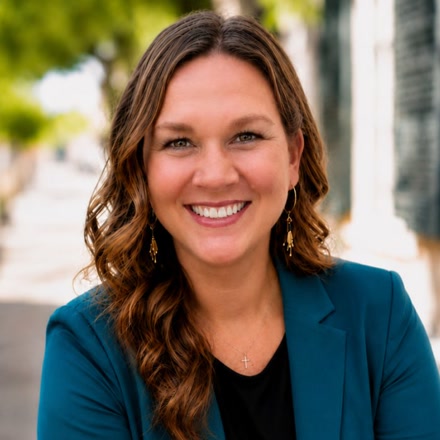
Hey, I'm Christa. I moved to Charleston in 2009 and haven't looked back — we've raised our three kids here and this community is genuinely home to me. Faith, family, and caring about people the right way are at the center of how I work. I want you to feel informed, comfortable, and never rushed — whether you're asking your first question or heading to closing. NMLS #1111313.
Equal Housing Lender. Christa Votaw, NMLS #1111313. Clear Home Loans, a Division of Aspire Home Loans, LLC, NMLS #1955132. This article is for general educational purposes only and is not financial, legal, real estate, investment, or tax advice, and is not an offer or commitment to lend. Descriptions of the VA home loan program, the VA funding fee, funding fee exemptions, and eligibility are general summaries of program guidance as of September 2026; that guidance is set by the U.S. Department of Veterans Affairs, is subject to change, and applies as described only to loans and borrowers meeting the applicable program criteria. Funding fee percentages shown are the VA's published fee schedule and are the same regardless of lender; they are not an offer of credit terms. Statements regarding proposed legislation describe a proposal that has not been enacted and may change or fail to become law. Eligibility for the VA home loan benefit and for any funding fee exemption is determined solely by the U.S. Department of Veterans Affairs, is evidenced by your Certificate of Eligibility, and cannot be promised or guaranteed by any lender. Nothing here is a promise, prediction, or guarantee of loan approval, qualification, exemption status, interest rates, monthly payments, loan terms, or down payment requirements. All loan programs are subject to credit approval, income and asset documentation, property and appraisal requirements, underwriting approval, and program availability, all of which may change without notice. Not affiliated with, endorsed by, or acting on behalf of any government agency, including the U.S. Department of Veterans Affairs.